But this is started -
www.verdibaritones.com
Only a frontpage for now. I have been reading a lot of Mary Jane Phillips Matz, lately! And pondering my 15-20 recordings of Rigoletto ad nauseam.
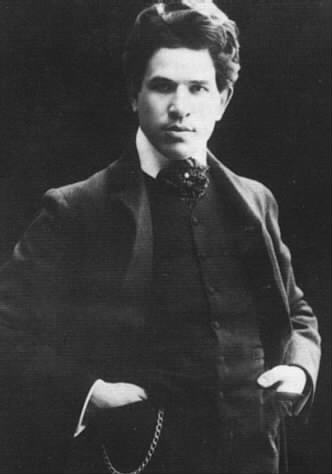
Stracciari really is magnificent.
Tuesday, March 15, 2011


Sunday, November 28, 2010
More YouTube indulgence - Richard Bonelli
I'm going to write more on here, really. But in the meantime...I can't believe I have never heard of this man...he's unbelievable! I am going to start that website on Verdi baritones sometime this month.
Tuesday, September 7, 2010
LOOK...AT...HIS...EYES!
Many blogs have little in the way of content, and instead deteriorate into posts of what essentially constitutes the blogger's favorite YouTube videos.
Oh well.
Oh well.
Tuesday, July 6, 2010
Cesare Siepi is dead
When I heard on the radio that Cesare Siepi had died, I thought...wait...he was still alive?
Amusing as that is--to me, anyway--it's not meant to make light of him. In fact, it exposes something quite positive - Siepi was one of the finest bass voices of the recorded era, so fine that I associate him inexorably with that near-superhuman class of voice which essentially ceased to exist after the 1960's. In short, most everyone with a voice of that caliber is long dead!
Consider his Mozart -
Talk about Chiaroscuro! And...his Rodgers and Hammerstein?
...it's pretty awesome too. They don't make 'em like that anymore.
RIP, signore Siepi.
Amusing as that is--to me, anyway--it's not meant to make light of him. In fact, it exposes something quite positive - Siepi was one of the finest bass voices of the recorded era, so fine that I associate him inexorably with that near-superhuman class of voice which essentially ceased to exist after the 1960's. In short, most everyone with a voice of that caliber is long dead!
Consider his Mozart -
Talk about Chiaroscuro! And...his Rodgers and Hammerstein?
...it's pretty awesome too. They don't make 'em like that anymore.
RIP, signore Siepi.
Friday, June 25, 2010
GOUNOD: Faust - Lyric Opera of Chicago
I haven’t written here in some time; I graduated last year and subsequently curtailed my writing about music. That is about to change.
I no longer write for any publication, so the tone and nature of my reviews will be different; I will also dedicate posts to my general thoughts and feelings about performers and the music world. But I think these will be positive changes, and will certainly give me more material to work with if I have the self discipline to keep the blog updated.
To begin, I think it is worth reproducing here a very brief piece I wrote in a hurry for a music critic contest last fall (which I was a finalist for, but did not “win” due to unforeseen circumstances). The piece is very short and does not flow well (due to word count constraints), but I believe it was the best of the bunch. You can view the archive of the contest and the subsequent firestorm here.
---
Lyric’s current production of Faust is so excellent that any criticism would be nitpicking. But I must say that the opera’s Romantic sentiments are often ruined by a cynical outlook, particularly in the last act where Marguerite looks like a 19th century crack whore.
That nit being picked, Piotr Beczala is a delight. His round, silver timbre, unerring legato, and crystalline top notes make for a stunning Faust. His ardent Salute, demeure chaste et pure is unrivalled by any current tenor.
As a character, René Pape was very fine as Méphistophélès—debonair and oozing gravitas. Unfortunately, while the devil was pleasingly in the details, Le Veau D’or lacked his usual ringing top and caused a slight panic when he got ahead of the orchestra. Vous Qui Faites L’endormie fared better vocally, but misfired on the all-important diabolical laughter.
As Marguerite, Ana María Martínez sings well and acts even better—particularly in the love duet—but I was left with the impression that the youthful voice of Katherine Lerner as Siébel would have been more appropriate to the Marguerite character. Lucas Meachem made for an impressive Valentin and sang his heart out in Avant de quitter ces lieu, perhaps pushing his voice a bit more than was wise, but certainly to splendid effect.
The chorus was the best I have ever heard them, precise and powerful. Andrew Davis kept a firm hand over the orchestra and produced all the aching Romantic touches necessary to the opera.
Thursday, December 11, 2008
HANDEL: Messiah - Karl Richter, London Philharmonic
Just came out yesterday. Remember that I always write to/about students.
---
Album: HANDEL: Messiah
Artist(s): Karl Richter, London Philharmonic Orchestra,
John Alldis Choir, Donald Macintyre, Stuart Burrows, Helen Donath, Anna Reynolds
One of the most honored holiday traditions of Anglo culture is performances of Handel’s Messiah. Most of us have attended at least one in our lives—we even have a biannual performance here at Elmhurst College that is always quite respectably done and is a standing recommendation. Nevertheless, experience strangely reveals that too few actually own a copy of Messiah on disc.
It therefore seems appropriate to highlight recommend this present performance of Karl Richter’s, which stands firmly in the Romantic Messiah tradition preserved through the last century. Unlike most modern recordings, this Messiah utilizes a full orchestra, large chorus, and operatic soloists who do no ornamentation. To the “period performance” type, this doubtless sounds horrific, but the fact of the matter is that this performance is one of recorded music’s best kept secrets, unfairly relegated to obscurity.
Richter’s conducting confirms his status as the then-reigning Bach expert—squarely Germanic, displaying broad, stately tempi and a good sense of baroque rhythm. The opening overture is vested with weight and great seriousness, but doesn’t drag—you may miss the double-dotting often read into the score if that’s what you’re used to, but the more traditional approach succeeds very well on its own terms. In particular the “Pastoral Symphony” is very pretty and lovingly phrased. The sound he draws from the orchestra is bit relaxed and mellow (the strings sound almost lazy in places), but very deep and appropriate to his stately conception.
Richter’s approach is well served by the John Alldis Choir, whose mature sound and admirable precision are on full display throughout. The lengthy melismas of “And He Shall Purify” sound quite comfortable for the ensemble and Richter’s dynamic changes are very well judged. “For Unto Us a Child is Born,” and “Hallelujah” both capture the necessary joy and grandeur of the words. Perhaps the only misfire is “Behold the Lamb God,” where the absence of double dotting inhibits the dramatic punch of the music.
The soloists are all rock solid vocally and are all native English speakers, delivering satisfying renditions of all the works solo “highlights.” Helen Donath and Anna Reynolds both consistently perform capably and musically, Donath notable for her sweet, even timbre. Donald Macintyre’s Wagnerian bass-baritone is sonorous, powerful, and delivers his solo pieces with suitable majesty and control. Most refreshingly, he also sings “But Who May Abide the Day of His Coming,” eschewing the inferior practice of giving this aria to the alto. But the tenor is the real standout here—in Stuart Barrows we have a consummate oratorio tenor, warm and bright, at once both gentlemanly and heroic. His performances of “Comfort Ye” and “Ev’ry Valley” are darn near perfect, elegant and sincere in the recitative, breezy and cheerful in the aria. And he is equally capable in “Thou Shalt Break Them,” correctly conveying the anger of the text with through both color and his explosive high notes.
In all, this performance produces a most singular and valuable quality: a feeling of timelessness, perfectly capturing the eternal nature of both the music and its subject matter. The album is definitely worth owning, and its relative obscurity makes it a fairly cheap proposition (around $8 on Amazon at the time of writing). If you don’t already Messiah, get this one.
Rating: A
---
Album: HANDEL: Messiah
Artist(s): Karl Richter, London Philharmonic Orchestra,
John Alldis Choir, Donald Macintyre, Stuart Burrows, Helen Donath, Anna Reynolds
One of the most honored holiday traditions of Anglo culture is performances of Handel’s Messiah. Most of us have attended at least one in our lives—we even have a biannual performance here at Elmhurst College that is always quite respectably done and is a standing recommendation. Nevertheless, experience strangely reveals that too few actually own a copy of Messiah on disc.
It therefore seems appropriate to highlight recommend this present performance of Karl Richter’s, which stands firmly in the Romantic Messiah tradition preserved through the last century. Unlike most modern recordings, this Messiah utilizes a full orchestra, large chorus, and operatic soloists who do no ornamentation. To the “period performance” type, this doubtless sounds horrific, but the fact of the matter is that this performance is one of recorded music’s best kept secrets, unfairly relegated to obscurity.
Richter’s conducting confirms his status as the then-reigning Bach expert—squarely Germanic, displaying broad, stately tempi and a good sense of baroque rhythm. The opening overture is vested with weight and great seriousness, but doesn’t drag—you may miss the double-dotting often read into the score if that’s what you’re used to, but the more traditional approach succeeds very well on its own terms. In particular the “Pastoral Symphony” is very pretty and lovingly phrased. The sound he draws from the orchestra is bit relaxed and mellow (the strings sound almost lazy in places), but very deep and appropriate to his stately conception.
Richter’s approach is well served by the John Alldis Choir, whose mature sound and admirable precision are on full display throughout. The lengthy melismas of “And He Shall Purify” sound quite comfortable for the ensemble and Richter’s dynamic changes are very well judged. “For Unto Us a Child is Born,” and “Hallelujah” both capture the necessary joy and grandeur of the words. Perhaps the only misfire is “Behold the Lamb God,” where the absence of double dotting inhibits the dramatic punch of the music.
The soloists are all rock solid vocally and are all native English speakers, delivering satisfying renditions of all the works solo “highlights.” Helen Donath and Anna Reynolds both consistently perform capably and musically, Donath notable for her sweet, even timbre. Donald Macintyre’s Wagnerian bass-baritone is sonorous, powerful, and delivers his solo pieces with suitable majesty and control. Most refreshingly, he also sings “But Who May Abide the Day of His Coming,” eschewing the inferior practice of giving this aria to the alto. But the tenor is the real standout here—in Stuart Barrows we have a consummate oratorio tenor, warm and bright, at once both gentlemanly and heroic. His performances of “Comfort Ye” and “Ev’ry Valley” are darn near perfect, elegant and sincere in the recitative, breezy and cheerful in the aria. And he is equally capable in “Thou Shalt Break Them,” correctly conveying the anger of the text with through both color and his explosive high notes.
In all, this performance produces a most singular and valuable quality: a feeling of timelessness, perfectly capturing the eternal nature of both the music and its subject matter. The album is definitely worth owning, and its relative obscurity makes it a fairly cheap proposition (around $8 on Amazon at the time of writing). If you don’t already Messiah, get this one.
Rating: A
BACH: "Ich Habe Genug"; BRAHMS: Lieder - Hans Hotter et al
Published...a few weeks ago.
---
Album: BACH: Cantata No. 82 "Ich Habe Genug"; BRAHMS: Vier erste Ges änge; 12 Lieder
Artist(s): Hans Hotter, Anthony Bernard, Geraint Jones, Philharmonia Orchestra of London, Gerald Moore
Traditionally, the best trained, most powerful, and most beautiful voices have favored the opera house, with interpretation taking a backseat to impressive vocalism. In contrast, less talented singers tend to favor the art song, committing all sorts of vocal immoralities in the name of “artistry.” And then there are the “period performance” twits, who can do most any ugly, scratchy thing so long as the academics agree.
It is a supreme pleasure, then, when vocalism at the very highest level is combined with the emotive qualities of the art song or the formal structures of baroque and renaissance music. Such is the case here.
Hans Hotter possessed a dark, majestic, distinctly Germanic bass-baritone. His was the thunderous voice of gods and kings, perfectly suited to the great Wagner roles for which he was known. It is strange, then, to think of him in the humble religious trappings of Bach, or the intimate world of German lieder. Yet, he was perhaps one of the most insightful interpreters of the last century, known for performances of great sincerity and feeling.
The present album, recorded when the Hotter was in his prime, exemplifies his vocal and interpretive powers. Bach’s Ich Habe Genug, in which the Christian protagonist expresses his distaste towards life and longs for Jesus, is given perhaps its most affecting treatment on record. To hear an instrument of such majesty in Bach is simply wonderful, and Hotter captures the cantata’s essence from the very first aria—he colors his powerful voice with complete humility, like a great man crushed by his cares. His phrasing displays a sensitive use of rubato, maintaining legato and the integrity of the vocal line while making each phrase ache with weariness. Similarly, the second aria is very legato, with Hotter lightening and warming his voice to create a vision of heavenly rest. And he throws himself into the difficult runs of third aria most impressively, his wish for death stated with just the right balance of aggression and desperation.
Brahm’s biblical Four Serious Songs are just that—there are four of them and they are very, very serious, except for the last one which is actually kind of cheery in parts. The insightful, cynical commentary of the three texts is given appropriately funereal treatment, and Hotter thunders nicely when the words call for it. The fourth song—in which Paul exhorts the Corinthians to practice charity—is very warm and strikingly sincere throughout.
The 12 lieder rounding off the album are a little more of a mixed bag. Most listeners are used to ignoring the character deficiencies of individual timbres, but at times, the sentimental poetry sounds just a bit odd in the voice of Wotan. Still, each song is interpreted expertly, and there is much here to please even the most critical ear. Feldeinsamkeit dreamily draws out Brahms’ Elysium-like world without ever languishing. Sappische Ode is very sweet, very devoted, and very beautifully phrased. Ständchen displays Hotter at his lightest and most charming. And of course, the more dramatic songs fare very well, particularly Verrat, in which the protagonist’s bitter sarcasm may be felt keenly.
Hotter’s collaborators are a pleasure throughout, the Philharmonia Orchestra supporting with a nice feeling of pathos in the Bach and Gerald Moore delivering his typically perfect accompaniments in the Brahms. The recorded sound varies, a little grey and grainy in the cantata (which strangely adds to the mood), but fairly clear in the lieder.
The Bach alone is worth the price of admission on this album, and the Brahms is almost as good. Indispensable for fans of either composer, particularly if you feel starved for fine voices in this repertoire. It’s selling at mid price, too.
Recommended.
---
Album: BACH: Cantata No. 82 "Ich Habe Genug"; BRAHMS: Vier erste Ges änge; 12 Lieder
Artist(s): Hans Hotter, Anthony Bernard, Geraint Jones, Philharmonia Orchestra of London, Gerald Moore
Traditionally, the best trained, most powerful, and most beautiful voices have favored the opera house, with interpretation taking a backseat to impressive vocalism. In contrast, less talented singers tend to favor the art song, committing all sorts of vocal immoralities in the name of “artistry.” And then there are the “period performance” twits, who can do most any ugly, scratchy thing so long as the academics agree.
It is a supreme pleasure, then, when vocalism at the very highest level is combined with the emotive qualities of the art song or the formal structures of baroque and renaissance music. Such is the case here.
Hans Hotter possessed a dark, majestic, distinctly Germanic bass-baritone. His was the thunderous voice of gods and kings, perfectly suited to the great Wagner roles for which he was known. It is strange, then, to think of him in the humble religious trappings of Bach, or the intimate world of German lieder. Yet, he was perhaps one of the most insightful interpreters of the last century, known for performances of great sincerity and feeling.
The present album, recorded when the Hotter was in his prime, exemplifies his vocal and interpretive powers. Bach’s Ich Habe Genug, in which the Christian protagonist expresses his distaste towards life and longs for Jesus, is given perhaps its most affecting treatment on record. To hear an instrument of such majesty in Bach is simply wonderful, and Hotter captures the cantata’s essence from the very first aria—he colors his powerful voice with complete humility, like a great man crushed by his cares. His phrasing displays a sensitive use of rubato, maintaining legato and the integrity of the vocal line while making each phrase ache with weariness. Similarly, the second aria is very legato, with Hotter lightening and warming his voice to create a vision of heavenly rest. And he throws himself into the difficult runs of third aria most impressively, his wish for death stated with just the right balance of aggression and desperation.
Brahm’s biblical Four Serious Songs are just that—there are four of them and they are very, very serious, except for the last one which is actually kind of cheery in parts. The insightful, cynical commentary of the three texts is given appropriately funereal treatment, and Hotter thunders nicely when the words call for it. The fourth song—in which Paul exhorts the Corinthians to practice charity—is very warm and strikingly sincere throughout.
The 12 lieder rounding off the album are a little more of a mixed bag. Most listeners are used to ignoring the character deficiencies of individual timbres, but at times, the sentimental poetry sounds just a bit odd in the voice of Wotan. Still, each song is interpreted expertly, and there is much here to please even the most critical ear. Feldeinsamkeit dreamily draws out Brahms’ Elysium-like world without ever languishing. Sappische Ode is very sweet, very devoted, and very beautifully phrased. Ständchen displays Hotter at his lightest and most charming. And of course, the more dramatic songs fare very well, particularly Verrat, in which the protagonist’s bitter sarcasm may be felt keenly.
Hotter’s collaborators are a pleasure throughout, the Philharmonia Orchestra supporting with a nice feeling of pathos in the Bach and Gerald Moore delivering his typically perfect accompaniments in the Brahms. The recorded sound varies, a little grey and grainy in the cantata (which strangely adds to the mood), but fairly clear in the lieder.
The Bach alone is worth the price of admission on this album, and the Brahms is almost as good. Indispensable for fans of either composer, particularly if you feel starved for fine voices in this repertoire. It’s selling at mid price, too.
Recommended.
Subscribe to:
Comments (Atom)