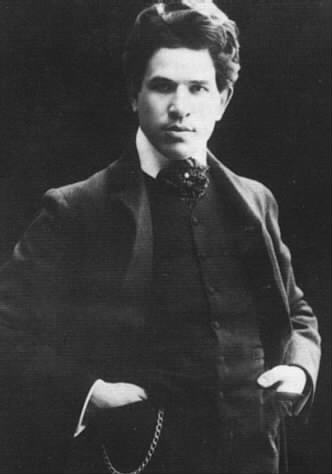
Written in Missouri, of all places. Under my own extreme duress.
Published in the October 21st issue of the Elmhurst College Leader.
---
Album: Verdi: Rigoletto
Artist(s): Robert Merrill, Anna Moffo, Alfredo Kraus, Rosalind Elias, Ezio Flagella, David Ward, Georg Solti, RCA Italiana Opera Orchestra and Chorus
Rigoletto has had many excellent recordings over the years. In the beginning of the LP era, it was one of the first complete operas produced, with the incomparable Leonard Warren in the title role. When stereo emerged, each label dutifully churned out its own star-studded Rigoletto, featuring such luminaries as Ettore Bastianini, Carl Bergonzi, Joan Sutherland, and the like. And this trend has continued to the present. Rigoletto is one of the strongest warhorses of the recorded repertoire and will likely continue to be. Yet, surprisingly, in almost every recording of the opera, there is some obvious weak link.
Not so here. In Robert Merrill, we have the most glorious baritone voice of the postwar period—a dark and resonant instrument with ringing top notes and an unfailing sense of legato. Often criticized for ‘just singing’ and not adequately portraying his characters, Merrill’s performance here sweeps all such criticisms aside. His scenes with Gilda are tender, warm, and affectionate—entirely contrary to his nasty antics at the court of Mantua. Then witness his Cortigiani and Si, Vendetta, in which he unleashes his voice in righteous, paternal fury. And the moment when his daughter dies is crushing, not in the voice of a pathetic and deformed clown, but as a man overcome by grief in failing his greatest duty. To him, the hunchbacked jester is an almost noble character, twisted into viciousness by his infirmity. More than any other singer who has portrayed Rigoletto, he is utterly believable as a loving and vengeful father. It is truly his finest role.
Gilda is admirably cast as well. From a purely musical standpoint, Anna Moffo’s Gilda about as good as anyone could expect, with lovely, even tone from top to bottom, a seemingly perfect sense of phrasing, and not the slightest hint of vocal strain. Luckily, Gilda requires more musical skills than interpretive ones, though Ms. Moffo is not without some insight. Her Caro Nome is full of girlish longing. Similarly, her Tutte le Feste al tiempo tugs at one’s heart strings in just the right way—she is just so perfectly naïve and angelic, it seems nearly inevitable that someone will murder her.
Merrill’s Rigoletto and Moffo’s Gilda have few if any challengers, but the role of the Duke is another matter. Most every great tenor has taken a shot at the role, whether he was suited to it or not. Kraus succeeds admirably, though not without reservations. Frankly, his main weakness is that his reedy voice is not the equal of Pavarotti or Björling. But such comparisons are unfair—on his own terms, Kraus is a perfectly rakish Duke, full style, and may be summarized as an insightful study in shallowness. He is perhaps the most flippant Duke on record—in Ella mi fu Rapita, his ‘ardent’ longing for Gilda is expressed in almost irritated terms, like he’s lost a toy. La donna è Mobile is full of verve and swagger, clearly conveying the Duke’s irreverent attitude.
The chorus is handled very well, and the smaller parts are consistently well cast. Ezio Flagello’s Sparafucile is less illustrious than some (most notably Cesare Siepi), but serves very well, particularly in the final scene. David Ward is perhaps the best and most convincing Monterone on disc, in sonorous, commanding voice. And Rosalind Elias is very good indeed, injecting a great deal of character into the otherwise small role of Maddalena.
Solti’s conducting is very typical of the maestro. From beginning end, it’s loud, blaring hell on wheels, indulging in dynamic extremes and delivered with an orchestral sledgehammer. In Solti’s hands, Verdi’s claims of serving drama through music are well borne out. A lighter, more lyrical hand might be preferred in the opening party scene, but otherwise, it serves the taut drama of the opera perfectly.
RCA’s sonics are brain splitting. The balance between voices and orchestra is pleasingly theatre-like, so much that the performance sometimes sounds like an unusually good live recording.
In all, this is perhaps the most consistent and dramatic reading of Rigoletto ever committed to disc.
Highly recommended.
Rating: A
Showing posts with label Opera. Show all posts
Showing posts with label Opera. Show all posts
Wednesday, October 22, 2008


Tuesday, April 8, 2008
Puccini: Tosca - Callas/Stefano/Gobbi/Sabata
To be published next week in the Elmhurst College Leader.
---
Album: Puccini: Tosca
Artist(s): Maria Callas, Giuseppe Di Stefano, Tito Gobbi, Victor De Sabata, Orchestra e Coro del Teatro alla Scala, Milano
Music critics have long been fond of drolly referring to Tosca as a “shabby little shocker” and then misattributing the comment to George Bernard Shaw. No small wonder, then, that this Tosca has long been hailed as the “greatest” opera recording of the last century, even before such milestones as the Solti Ring and the Giulini Don Giovanni.
But are such superlatives justified? There have been many fine recordings of Tosca in the 50 years since this one, most with better recorded sound and many of them boasting excellent casts. Are they so clearly second-rate?
The truth is, it depends on how you think of opera. If perfect vocalism is your standard, this performance will not be a first choice. As adored singer Floria Tosca, Callas’ striking-but-not-beautiful voice is somewhat paradoxical, occasionally sacrificing legato for the sake of some dramatic effect or another. Similarly, Giuseppe Di Stefano’s golden, lyric tenor voice sounds hollow and pressed on top, most noticeably in the heroic Vittoria! of Act 2. And Gobbi’s voice is typically venomous, lacking any real heft or depth. Those seeking consistently beautiful, secure singing from beginning to end would do well to acquire the excellent sets of Tebaldi or Caballé, the latter featuring a young José Carreras in particularly fine voice.
Dramatically, however, this recording is likely unequalled, which is saying a lot in a story driven by murder, torture, attempted rape, and suicide. Callas plays Tosca as ideally as one could hope for—a hotheaded, passionate woman subject to conflicting fits of suspicion, vanity, vulnerability, white-hot anger, and the most deeply felt compassion. For example, her jealous outburst in Act 1, “Lo Neghi?” (“You deny it?), is just short of shrill and is most convincingly pissy. Conversely, Vissa d’arte is beautiful and perfectly paced—a masterful depiction of suffering, in which the cry to God at the end of the aria is a fearful but reverent plea for mercy. But perhaps most striking is the moment when Tosca stabs and then hisses at the dying Scarpia, “Muori! Muori! Muori!” (Die! Die! Die!), delivered so viciously you can almost see the blood on her hands.
Cavaradossi is always less important in this opera, but Giuseppe Di Stefano makes a good case for him. What Stefano’s Cavaradossi lacks in heroism he makes up for in beauty—with Stefano, we never forget that Cavaradossi is a lovesick artist. His two arias come off with great sentimentality and his Act III duet with Tosca, O dolci mani, displays some of the most ardent and beautiful singing ever recorded.
But Callas and Stefano are more than matched in the Baron Scarpia of Tito Gobbi. His trademark snarl is used to great effect, capable of both stentorian authority and warm, honeyed manipulation. This is the definitive Scarpia—a vile, slithering, sadistic animal in an aristocrat’s coat, who makes Darth Vader look kind of like a sissy. At the end of Act 1, Gobbi’s Te Deum is the most gripping in the catalogue, illustrating both his declamatory style and the thoughtfulness of his interpretation. To extract an example: Scarpia’s high note in the last phrase, “Tosca, mi fai dimenticare Iddio!” (“Tosca you make me forget God!), usually milked for melodrama, is here underplayed. Why? Because for Scarpia, this isn’t a fervent confession of evil; it’s just a statement, and it’s hardly a turning point for a villain so foul. In truth, Gobbi’s Scarpia sounds most fervent when he’s torturing Cavaradossi, where his gleeful snarling conveys the Baron’s sadism perfectly. But, almost as important, he also dies very well, shouting furiously and choking on his own blood in a pleasingly graphic way.
Victor De Sabata leads the orchestra in a reading of blistering, Italianate intensity. Every line of the score is sharply defined without ever sacrificing weight or visceral impact. Furthermore, everything is paced to create the most excruciating tension possible—when else has the orchestra so perfectly conveyed the desperation of Tosca’s confrontation with Scarpia? And when else has the ending of Tosca felt so physically, mercilessly traumatic? In Sabata’s hands, the orchestra does a most marvelous thing: it becomes another voice, telling the story as clearly as any one of the characters.
In all, this is a superb achievement that admirably lives up to its reputation. If you’ve never experienced opera as drama, this is the place to start.
Highly recommended.
Grade: A+
---
NOTE: Be sure to get this 1997 Callas Edition (still in print and readily available), rather than one of the subsequent poor remasterings.
Friday, March 7, 2008
Tenors...
Stephen Costello, James Valenti, Piotr Beczala, and Michael Spyres.
The first three already have something of a reputation, but the last is no less talented.
Google them if you haven't heard the names. They will be the future...mark my words.
---
EDIT: There's also much talk of this Stas Vitart fellow, but I need to hear him sing somewhere besides his living room before I can be sure.
The first three already have something of a reputation, but the last is no less talented.
Google them if you haven't heard the names. They will be the future...mark my words.
---
EDIT: There's also much talk of this Stas Vitart fellow, but I need to hear him sing somewhere besides his living room before I can be sure.
Tuesday, December 4, 2007
First Review--Boris Christoff sings Russian Opera Arias and Songs
The following was written in a wee bit of a hurry, since I had a deadline to meet. I do feel the need to deride it shortcomings, but I will resist the temptation of a diatribe...
Understand that the intended audience was apathetic college students. The two greatest difficulties were A) abstaining from 'technical' language, and B) deciding how much space to give to each track (and whether to leave any out). I eventually opted for a great deal of subjective language and addressed each track individually, though often briefly. Since it is my first review, I do not feel terribly ashamed. And David Hurwitz has offered to "rip [my reviews] to shreds," so I hope that I shall improve.
Published 12/04/07 in the Elmhurst College Leader.
Understand that the intended audience was apathetic college students. The two greatest difficulties were A) abstaining from 'technical' language, and B) deciding how much space to give to each track (and whether to leave any out). I eventually opted for a great deal of subjective language and addressed each track individually, though often briefly. Since it is my first review, I do not feel terribly ashamed. And David Hurwitz has offered to "rip [my reviews] to shreds," so I hope that I shall improve.
Published 12/04/07 in the Elmhurst College Leader.
---
Album: Russian Opera Arias & Songs
Artist(s): Boris Christoff, et al.
As with his complete recordings of the opera, Christoff sings all three bass roles from Mussorgsky’s Boris Godunov. While the intimidating authority of his voice is perhaps better suited to the character of the Tsar, the other roles are admirably done. Pimen’s act I monologue, though lacking humility, is imbued with sufficient reverence to portray the priest. In contrast, the dark gusto put into “Varlaam’s Drinking Song” about the slaughter at
The other Mussorgsky cuts are fine as well. “Dositheus’s Aria” from Khovaschina has the religiosity which was lacking in the Pimen monologue; “The Flea” has just the right balance between humor and the diabolical (one must remember that the singer takes on the role of Mephistopheles). The two songs accompanied by Gerald Moore (“The Field Marshall” and “The Spirit of Heaven”) aptly demonstrate his comfort in the genre of art song.
The various arias of other composers show off Christoff’s ability to effortlessly change character. “Prince Galitsky’s aria” from Borodin’s Prince Igor sounds genuinely carefree. “The Song of the Viking Guest” from Rimsky-Korsakov’s Sadko is suitably majestic (though I might prefer an even larger voice singing it), with the orchestra’s dark, weighty sound vividly painting a backdrop of the high seas. Christoff’s performance of “Prince Gremin’s Aria” from Tchaikovsky’s Eugene Onegin is very tender and is easily the loveliest version I have heard of it—the sense of a mature man of the world rediscovering youthful love is touchingly evident.
It’s worth noting that many of the arias and songs on this disc are in direct competition with recordings by Chaliapin (the Mussorgsky in particular), and, while Christoff has the advantage of later, better sound, aficionados might still prefer Chaliapin’s versions. However, in many cases, Christoff’s renditions surpass those by the Russian master, and the “Song of the Volga Boatmen” is a case in point. While Chaliapin’s recordings are indispensable, I would never be without Christoff’s performance. Christoff invests the traditional Russian song with a near “operatic” sense of drama—heavy, angry, powerful, full of dynamic contrast, gradually building to a furious climax which is sung in such an unapologetic and over-the-top manner that one cannot help but be swept away by his performance. “The Siberian Prisoner’s Song” is perhaps even more dramatic—after hearing it, Christoff’s artistic sensitivity may never be doubted. It is a truly beautiful interpretation, demonstrating the range of colors in Christoff’s voice (including his ravishing mezza voce), as well as his complete emotional investment into the tragic content of the text.
In all, this is a magnificent album. Entirely worthy of the Great Recordings of the Century moniker, and at this price ($8-$14 on Amazon.com), it’s a steal, too. If you have never heard Christoff in this repertoire, you need to. Get it.
Rating: A+
Subscribe to:
Posts (Atom)